About
I’ve spent 26 years building software, much of it in regulated environments: the Lloyd’s of London insurance market, credit risk at Lloyds Bank, the credit card platform at NewDay, and Shell’s trading front office. Although my roles have changed over the years, I’ve always tried to stay close to the engineering. Today I’m Head of Technology Strategy at Aviva Global Corporate & Specialty in London.
My focus now is agentic engineering: using AI agents to refine requirements and write code, while engineers manage and govern the process, particularly in regulated environments. This is sometimes described as “human-on-the-loop.”
What interests me is not only what these agents can do. The more difficult question is what we should allow them to do while still being able to stand behind the decisions when an auditor, a regulator, or simply another engineer asks how we got there.
This is largely what I write about: how we get the productivity of AI agents without losing the engineering discipline, security and accountability around them.
Agentic engineering is changing how software is built surprisingly quickly. I think the methodologies and frameworks we use to govern engineering teams will have to change with it.
From TDD to agents
In many ways, this is not very different from the engineering problems I have been interested in for years.
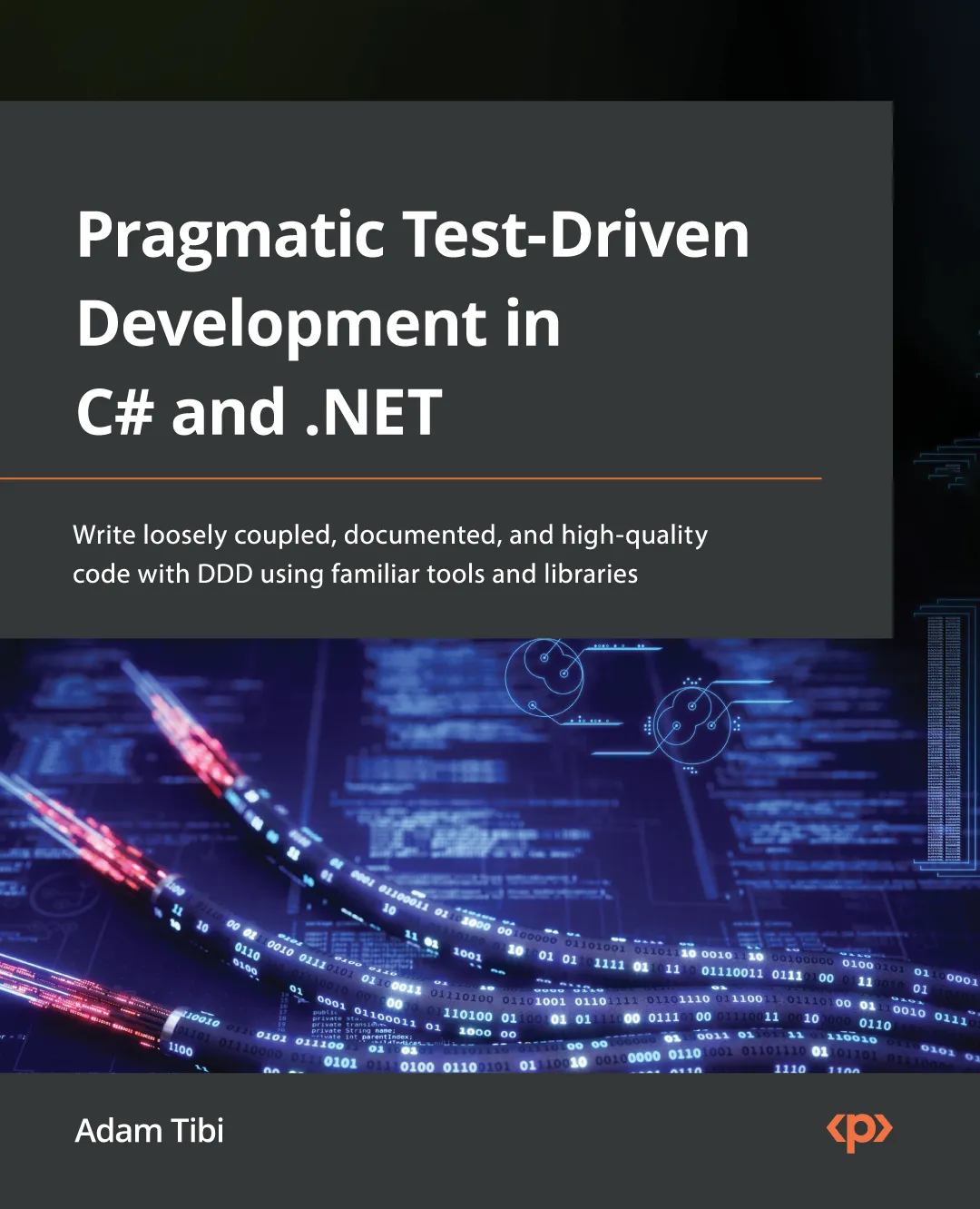
After years of championing software engineering practices including test-driven development, I wrote Pragmatic Test-Driven Development in C# and .NET (new tab) for Packt.
I see a fairly natural connection between TDD and agentic engineering. With TDD, we put expectations around the code before writing it. With agents, we increasingly need to define expectations, boundaries and checks before allowing the agent to do the work. The technology is different, but the engineering instinct behind it is quite familiar.
Machine learning pulled me in early too. Before generative AI took over everyone’s attention, I spent time experimenting with deep learning and forecasting, and my series on LSTM forecasting (new tab) was picked up by Towards AI.
Beyond the day job
The “Hello World” of every engineer’s about page seems to be the story of their first computer, so I won’t break tradition.
Mine was a 386 running MS-DOS and Windows 3.11. At fifteen, I modified Microsoft Gorillas in QBasic and then wrote a program that plotted equations on a Cartesian plane. At the time, of course, I had no idea that I would still be doing variations of the same thing decades later.
I never really stopped tinkering. Outside work I still build free products and experiment with technology, partly to keep my engineering skills sharp and mostly because I don’t want to become someone who talks about engineering without doing any.
I’m also completing an MBA at Hult Business School.
AI Notice
I write every post myself, usually because something I have read, an event, or a new resource has triggered an idea I want to explore. Once I have finished the first draft, I sometimes pass it to an LLM to challenge my thinking, point out jargon that may not be clear to readers, and check the spelling and grammar. The ideas and the original writing come first. AI is something I use afterwards for feedback.
Get in touch
Most of the conversation happens on LinkedIn (new tab). If you’re working on bringing AI agents into a regulated organization, I’m always interested in comparing notes.
I’m also on X (new tab) and GitHub (new tab).